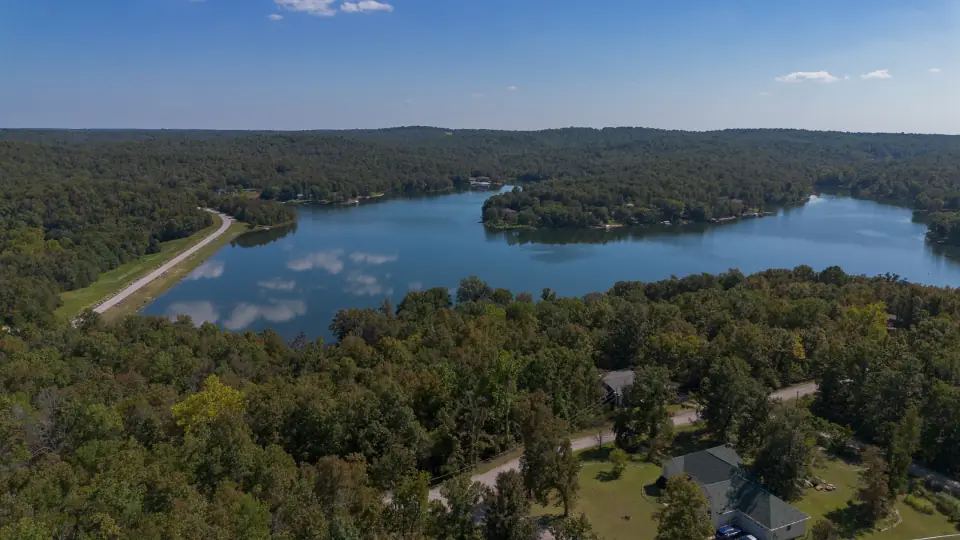
Investing abroad: how to diversify with a real asset in the United States
Keeping all your savings in one country means betting everything on one currency and one economy. Investing abroad spreads that risk. Here are the ways to do it, what to declare at home and where land fits.
 By Fridrik Grimsson 5 min read
What does investing abroad mean?
It means holding part of your money in assets located or issued outside your country: an account, a fund, shares or property. The goal is not to earn more, but to stop depending on a single currency and a single economy.
Investing abroad is not only for the wealthy. You can open an account in another currency, buy an international fund or, as we explain here, a lot in the United States from USD 15,000. Each option has its own rules, costs and risks.
Why diversify outside your country?
Because your salary, your home and your savings probably depend on the same economy and the same currency. If that currency weakens, you lose on all of them at once. An asset abroad, in dollars, does not move the same way.
This year's data shows it. In Argentina, inflation reached 33.4% over twelve months to September 2026. In Brazil, the dollar went from R$5.44 in January to R$5.05 in October according to the Banco Central do Brasil: exchange rates move both ways, and no one knows where they will go next.
Everything at home
Your country, your currency
- Salary
- Home
- Savings
Your currency falls: everything drops at once
Part of it abroad
Your country, your currency
- Salary
- Home
- Part of your savings
Your currency falls
United States, in dollars
- Land or a fund in dollars
This part does not move the same way
Diversifying is not guessing. It is spreading your savings so one event does not hit everything at once. The buying process shows how a lot fits into that from abroad.
What are the ways to invest abroad?
The five most common are a dollar account, an international broker for funds or shares, local funds that invest abroad, a rental property and a lot. They differ in liquidity, income, minimum amount and who holds your investment.
The table sums up all five. None is best: it depends on how long you can wait, whether you need income and how much you want to manage.
| Option | What you hold | Liquidity | Income | Amount to start |
|---|---|---|---|---|
| Dollar account | A balance at a bank | High | Low or no interest | Low |
| International broker | Shares or funds in your name at a foreign firm | High | Depends on the asset | Low to medium |
| Local funds investing abroad | Units in a fund at home | High to medium | Depends on the fund | Low |
| Rental property | A house or apartment | Low | Rent, minus costs | High: the typical foreign purchase in the US is USD 465,000 |
| Land | A lot with a deed in your name | Low | No | USD 15,000, or USD 3,000 down |
Financial asset or real asset: the difference that matters
A financial asset is a contract: a share, a bond or a fund unit. Its value depends on the market and on the firm that holds it. A real asset is something physical, like a building or a lot, that exists whatever the market does.
A lot with a recorded deed is a real asset in your name in a public registry, not on a company's balance sheet. The trade-off is liquidity: the US Cooperative Extension notes that selling property can take a long time. So it works alongside financial assets, not instead of them. More in the pros and cons of investing in land.
How can you invest in the US from Latin America?
For financial assets, you open an account with a regulated broker. For property, you buy directly from a seller with a recorded deed. Either way, check who is behind it and make sure you can declare the investment at home.
Before sending money to a foreign firm, check that it is supervised. Chile's financial regulator (CMF) warns that with unsupervised entities there is a high risk of losing your investment.
To buy one of our lots you only need your national ID or passport; the full process is in how to buy land in the USA. To see who is selling, read about us.
Do you have to declare property abroad?
Yes. Chile, Argentina and Brazil tax their residents on assets or gains abroad, and a US lot falls under those rules. How you declare it depends on the country.
The table sums up each country's rule with its official source. It is a starting point, not advice: check it with your accountant.
| Country | Rule | Also |
|---|---|---|
| Brazil | Declare the property in the IRPF under assets abroad, whatever its value. The 15% yearly tax in Law 14,754 applies to financial investments, not to property you own directly: that is taxed as a capital gain when sold. | If your assets abroad total USD 1 million or more on December 31, also the central bank's CBE return. |
| Chile | According to the SII, selling property abroad is taxed under the general income taxes, not the special regime for property in Chile. | Check with your accountant how to report it in the annual return. |
| Argentina | Property abroad is subject to Bienes Personales (personal assets tax). Since Law 27,743, it uses the same scale as assets in the country. | Declared every year with the rest of your assets. |
In the US, while you hold the lot, the only tax is property tax. If you ever sell or rent it out, you will need a tax number, as explained in when you need an ITIN.
What does a US lot not give you?
It earns no income while vacant, it is not instantly liquid and it gives you no visa or residency. Nor is its appreciation guaranteed. It is an asset for holding value in your name, not for producing income.
Residency is the most common confusion, and we clear it up in does property give you residency?. If you are thinking about your family, also read estate tax on US land.
How much of your savings to put abroad
There is no right percentage for everyone, and we will not give you one: it depends on your age, income, debts and when you will need the money. A financial adviser in your country can help you set it.
One safe rule: invest abroad only money you will not need soon, and start with something you understand. A lot can be paid in 24 fixed payments in dollars, with no banks, so you can start with a limited amount.
Where to start
If land fits your plan, see the available lots with drone photos and parcel numbers, or find them on the map of the lots. If you would rather talk it through, book a video call with the team.
Frequently asked questions
Is investing abroad legal?
Yes. In Chile, Argentina and Brazil it is legal, as long as you declare your assets and gains under your country's rules.
How much do I need to invest in the US?
It depends on the asset. An account or fund can start small; a lot in Cherokee Village costs USD 15,000, or USD 3,000 down and 24 payments of USD 500.
Is a US lot taxed in my country?
Yes, under your country's rules: in Argentina it is part of Bienes Personales, in Brazil it is declared in the IRPF, and in Chile a sale is taxed under the general income taxes.
Do I need to travel to the US to buy?
No. You sign and pay from your country, and the deed is recorded in Fulton County.
Updated October 21, 2026